Too Much Signal, Too Little Sense: The Sensor Proliferation Problem Undermining Plant Intelligence
For the better part of a decade, American manufacturers have been told that more sensors mean smarter operations. The logic was straightforward: instrument every machine, monitor every variable, and the factory floor would reveal its own inefficiencies. The capital investment followed accordingly. Vibration sensors, thermal cameras, pressure transducers, flow meters, and environmental monitors now populate production environments at a density that would have seemed extraordinary just fifteen years ago.
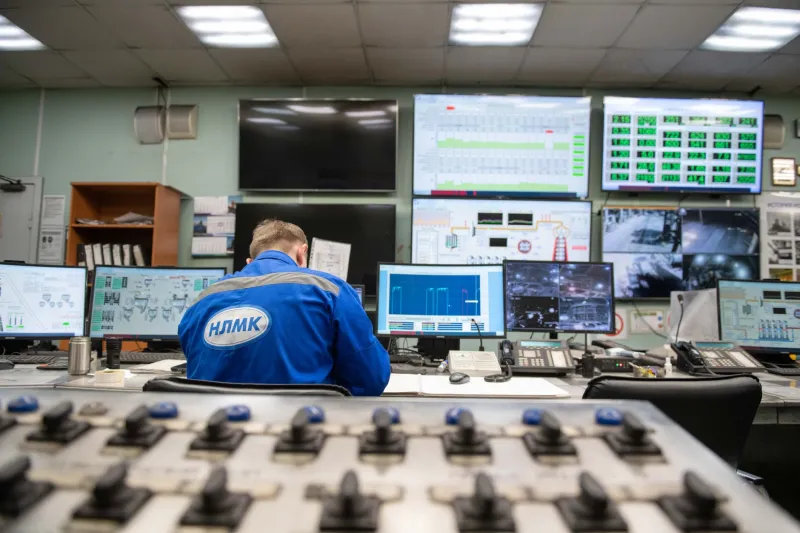
Yet a quiet contradiction has emerged. Plant managers at some of the most heavily instrumented facilities in the country describe a paradox: the more data their systems generate, the harder it has become to act on any of it. Dashboards refresh constantly. Alert queues grow faster than operators can review them. And somewhere inside the torrent of readings, the signal that matters — the one that precedes a $400,000 unplanned outage — waits to be noticed.
This is the sensor proliferation problem. It is not a hardware failure. It is a design failure.
The Gap Between Instrumentation and Intelligence
Sensors are not intelligence. They are inputs. The distinction matters enormously in practice, and yet it tends to get lost in procurement conversations that prioritize coverage over context. A facility that has deployed 3,000 sensing endpoints without a corresponding investment in data architecture has not built a monitoring system — it has built a very expensive noise machine.
The core issue is that raw sensor data lacks hierarchy. Every reading arrives with equal urgency unless something in the layer above it assigns relative importance. When that hierarchical logic is absent or poorly defined, operators are left to apply their own judgment to a stream of information that exceeds human cognitive bandwidth. Studies on industrial alert management consistently find that high-volume alert environments produce slower response times, not faster ones. The cognitive load imposed by irrelevant notifications degrades the attentiveness required to catch the ones that are genuinely critical.
In practical terms, this means that a plant with 3,000 sensors and no intelligent filtering architecture may actually have worse operational visibility than a plant with 800 sensors and a well-designed edge analytics layer. Volume is not a substitute for structure.
How Facilities Arrive at This Problem
Sensor proliferation rarely happens all at once. It accumulates through a series of individually reasonable decisions. A maintenance team adds vibration monitoring after a bearing failure. Environmental compliance requirements trigger the installation of emissions sensors. A new production line comes equipped with its own embedded monitoring suite that feeds a vendor-specific dashboard. Over several budget cycles, the facility's sensing footprint expands — but the integration architecture does not keep pace.
The result is what industrial technology specialists sometimes call a fragmented monitoring landscape: multiple data streams, multiple dashboards, and no unified layer that correlates signals across systems. A thermal anomaly on a motor drive and a subtle pressure deviation in an adjacent hydraulic circuit may together indicate an imminent failure mode, but if those signals live in separate systems with no cross-referencing logic, the relationship remains invisible until the failure makes it obvious.
This fragmentation is not merely an inconvenience. It represents a structural gap between the investment a manufacturer has made in sensing infrastructure and the operational value that infrastructure is capable of delivering.
The Architecture That Resolves the Paradox
The path out of sensor noise is not fewer sensors. It is better architecture between the sensor and the decision-maker. Three elements are essential.
Edge-level filtering and pre-processing. Not every data point needs to travel to a central system for analysis. Edge computing platforms deployed close to the equipment can evaluate sensor readings against defined operational envelopes, suppress routine-within-normal-range data, and escalate only the readings that warrant attention. This dramatically reduces the volume of data reaching operators without reducing the coverage of the monitoring network.
Contextual alert logic. Threshold-based alerting — the model in which a sensor fires when a value crosses a fixed limit — is a baseline capability, not an intelligence layer. More effective systems use contextual rules that account for equipment age, operating cycle, ambient conditions, and recent maintenance history before generating an alert. A vibration reading that would be unremarkable on a new machine may be highly significant on one that is 11 years old and overdue for a scheduled inspection. Alert logic that incorporates that context produces notifications that operators trust — and therefore act on.
Unified operational visibility platforms. When monitoring data from disparate sources flows into a single, well-designed operational interface, correlation becomes possible. Cross-system signal relationships that would otherwise go undetected can be surfaced automatically, giving plant managers a composite view of facility health rather than a collection of isolated metrics.
Turning the Paradox Into an Advantage
Manufacturers who successfully resolve the signal-to-noise problem do not just recover the value of their existing sensor investment — they build a compounding operational advantage. When operators trust their monitoring systems because those systems surface relevant information rather than overwhelming them, response times improve. When edge analytics reduce the cognitive burden on floor-level staff, their attention is available for the judgment calls that automation cannot make. When cross-system correlation catches compound failure signatures early, the cost of intervention drops sharply compared to reactive repair.
The facilities that are getting this right share a common characteristic: they approached sensor deployment as a data architecture project, not a hardware project. The sensors were the last decision, not the first. Before specifying instrumentation, they defined the operational questions they needed to answer, the decisions those answers would inform, and the data flows required to connect the two.
That sequence — question, decision, data, sensor — produces monitoring environments that clarify rather than obscure. For manufacturers still operating in the opposite direction, the good news is that the architecture can be built around existing infrastructure. The sensors are already in place. What most facilities need now is the intelligence layer that makes them useful.