When the System Meant to Connect Everything Becomes the Wall Between Your Floor and Your Decisions
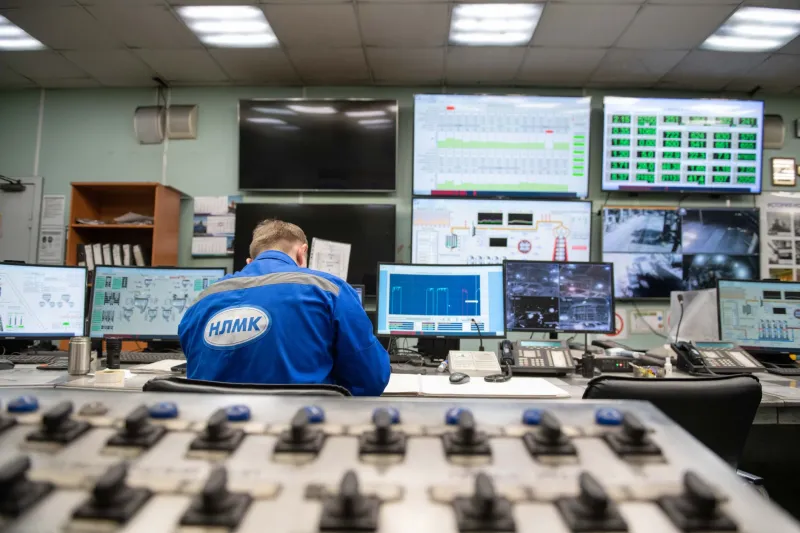
There is a particular irony embedded in the architecture of most American manufacturing facilities today. The enterprise resource planning system—the platform purchased, configured, and maintained at considerable expense precisely to eliminate information silos—has become one of the most consequential silos on the production floor. Not because the technology is inherently flawed, but because the way it was designed to receive, process, and distribute data no longer matches the speed at which modern manufacturing actually operates.
For plant managers and operations directors across the US industrial sector, this is not a theoretical concern. It is a daily friction point that compounds quietly, shift by shift, until the gap between what is happening on the floor and what leadership believes is happening becomes wide enough to drive real production losses through.
How ERP Systems Were Designed Versus How Factories Actually Work
The foundational premise of an ERP system is centralization: one authoritative source of record for inventory, scheduling, production orders, procurement, and financial data. In theory, this eliminates the fragmentation that plagued manufacturers in earlier decades, when departments maintained separate spreadsheets and reconciled them manually at the end of each week.
In practice, however, ERP platforms are built around structured data entry workflows. A machine operator encounters an anomaly—an unexpected material variance, an equipment slowdown, a quality deviation. That observation must be translated into a form the ERP can accept, entered through a terminal or interface, routed through approval queues, and eventually surfaced in a report that a supervisor or plant manager reviews on a scheduled basis. By the time that information completes its journey through the system, the production reality it described may have already changed three times over.
This is the fundamental mismatch: the factory floor operates in real time, but most ERP architectures are built around batch processing logic and human-mediated data entry. The system was never designed to capture the ambient, continuous intelligence that a modern connected facility generates.
The Approval Queue Problem
Consider a representative scenario common across mid-sized US discrete manufacturers. A line supervisor identifies a tooling issue at 6:40 a.m. that will affect output on a critical customer order scheduled for afternoon shipment. To escalate the issue through the ERP, the supervisor must log the deviation, attach supporting data, and submit it for review. The production manager, who is in a shift handoff meeting, does not see the flag until 8:15 a.m. By the time a decision is made to pull replacement tooling from another cell, nearly two hours have elapsed—hours during which the line continued running, accumulating scrap, or sat idle waiting for direction.
The ERP captured the event. It routed the notification. It did precisely what it was configured to do. And yet the facility lost two hours of productive capacity because the architecture of the system introduced latency that the urgency of the situation could not afford.
Multiply this pattern across dozens of daily micro-decisions—material substitutions, scheduling adjustments, quality holds, equipment changeovers—and the cumulative drag on throughput becomes significant. Research from manufacturing operations analysts consistently finds that a substantial portion of unplanned downtime in ERP-dependent facilities is not caused by equipment failure or supply chain disruption. It is caused by decision latency: the gap between when the floor knows something and when management can act on it.
The Integration Architecture Shift
The response emerging across leading US manufacturers is not to abandon ERP systems—these platforms remain essential for financial consolidation, regulatory compliance, and enterprise-wide planning. The shift is architectural. Rather than routing all operational data through the ERP as a first stop, forward-looking facilities are deploying edge computing layers and industrial IoT middleware that capture floor-level data at the source, process it locally, and surface actionable intelligence directly to the people who need it—without requiring that information to pass through ERP workflows first.
In this model, the ERP receives a curated, structured feed of confirmed operational data for record-keeping and planning purposes. But the real-time decision layer operates independently, pulling from machine sensors, quality inspection systems, and operator inputs through lightweight integration platforms that can respond in seconds rather than minutes.
Industrial edge devices positioned at the cell level can aggregate data from multiple machines, apply threshold-based alerting logic, and push notifications directly to supervisory dashboards or mobile interfaces—all without touching the ERP until a transaction is finalized. The result is a two-tier architecture: real-time operational intelligence at the floor level, and structured enterprise data in the ERP, synchronized on a cadence that makes sense for planning rather than one imposed by the urgency of production decisions.
What Manufacturers Are Gaining by Rethinking the Flow
Facilities that have implemented this kind of decoupled integration architecture report measurable improvements in several areas. Decision response times for production anomalies drop significantly when supervisors receive direct, contextual alerts rather than waiting for ERP-mediated notifications. Scrap rates decline when quality deviations are flagged in real time rather than discovered during end-of-shift reporting. And scheduling agility improves when planners can see actual machine availability and work-in-progress status from a live dashboard rather than relying on ERP data that may be hours behind the floor's current state.
Equally important, operators and line supervisors report reduced administrative burden when data capture is automated through connected sensors rather than manual entry. This is not a trivial benefit in an environment where skilled labor is scarce and every minute of a technician's time has measurable value.
Rethinking the Role of the ERP
The most productive reframing for operations leadership is to stop treating the ERP as the nervous system of the factory and start treating it as the system of record for completed transactions and enterprise planning. The nervous system—the real-time sensing, communication, and response layer—belongs closer to the machines, the people, and the processes that generate operational data in the first place.
This does not require a wholesale replacement of existing ERP investments. Modern integration middleware is specifically designed to sit alongside legacy platforms, consuming their planning outputs while feeding them structured operational data on appropriate schedules. The capital requirement is considerably lower than a full platform migration, and the operational benefits begin accruing much sooner.
For US manufacturers competing in an environment where customer lead times are compressing and production flexibility is increasingly a differentiator, the cost of maintaining the status quo—of continuing to route every operational signal through an enterprise system built for a slower era—is a cost that the competitive landscape is becoming less willing to absorb. The ERP will remain essential. But it should serve the factory, not govern it.