What the Machine Knew First: Inside the Data Signals That Preventive Maintenance Software Catches Before Human Inspectors Ever Arrive
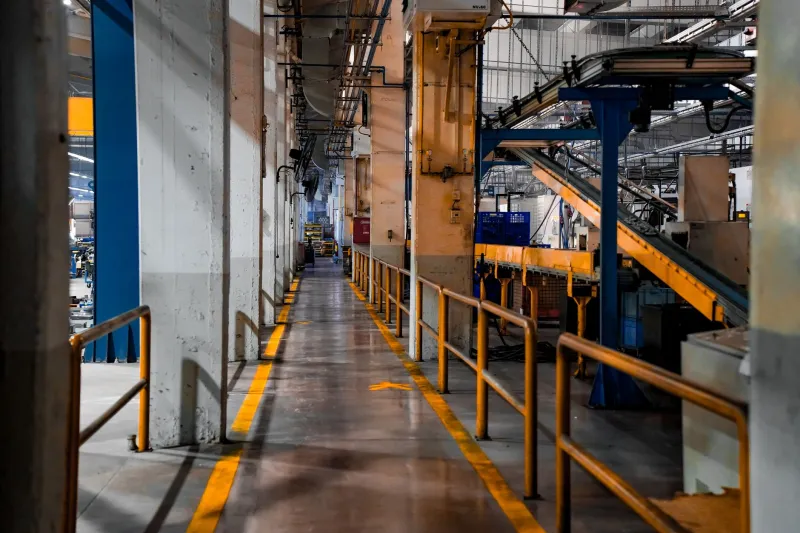
The bearing on Line 4 had been failing for eleven days before anyone noticed anything wrong. The vibration signature had been shifting — subtly at first, then with increasing clarity — in a pattern that experienced maintenance engineers would have recognized immediately if they had been present, instruments in hand, at the right moment. They were not. They were managing thirty-seven other assets across two shifts, working from a maintenance calendar built around time intervals rather than equipment condition.
When the bearing finally seized, it took a gearbox with it. The unplanned downtime cost the facility more than $180,000 in lost production, emergency parts procurement, and overtime labor. The preventive maintenance software that the facility's operations director had been evaluating for fourteen months would have flagged the anomaly on day three.
This scenario, or variations of it, plays out in American manufacturing facilities with a frequency that the industry has largely normalized — because until recently, there was no practical alternative.
The Structural Limits of Human Inspection
Traditional maintenance programs are built around a logical premise: inspect equipment on a schedule, catch problems before they become failures, replace components before they wear out. In practice, this approach has two structural weaknesses that no amount of inspector skill can fully overcome.
The first is temporal. A maintenance technician conducting a weekly inspection captures a single snapshot of equipment condition. What happens between inspections — the gradual temperature drift, the developing imbalance, the intermittent voltage spike — is invisible unless it happens to manifest during that narrow window. Equipment that behaves normally during inspection and fails three days later is not a maintenance failure in any meaningful sense. It is a detection gap.
The second weakness is perceptual. Human inspectors are remarkably capable of identifying problems that have progressed to a detectable stage. They are far less capable of detecting the precursor signals that precede that stage — the subtle vibration harmonics, the 1.2-degree temperature differential, the micro-second current anomaly that indicates winding insulation beginning to degrade. These signals are real, they are measurable, and they are beyond the practical reach of manual inspection at scale.
Preventive maintenance software addresses both weaknesses simultaneously.
The Metrics That Actually Predict Failure
Plant managers who have deployed industrial monitoring systems often describe a period of recalibration — a realization that the metrics they had historically prioritized were not the ones that most reliably predicted failure.
Vibration analysis is among the most powerful diagnostic tools available to modern maintenance platforms. Industrial sensors capturing vibration data at high sampling rates can identify bearing defects, shaft misalignment, gear wear, and rotor imbalance at stages where the physical manifestation is entirely imperceptible to touch or sound. The software does not simply flag elevated vibration — it analyzes frequency signatures against known fault patterns and identifies which specific failure mode is developing.
Thermal data tells a complementary story. Infrared temperature monitoring across electrical panels, motor housings, and drive components can identify connection resistance issues, cooling system degradation, and overload conditions that would not register on a visual inspection. The critical insight is not the temperature itself but the trend — the rate at which temperature is changing relative to load conditions and historical baseline.
Current signature analysis adds another layer. The electrical draw of a motor contains encoded information about the mechanical load it is managing. Predictive maintenance platforms can extract bearing condition, coupling wear, and driven-equipment anomalies from current waveform data without any direct mechanical instrumentation on those components.
Together, these data streams create a picture of equipment health that no human inspection program, however diligent, can replicate.
What Plant Managers Describe in Practice
Operations leaders who have transitioned from schedule-based to condition-based maintenance programs consistently report a similar early experience: the software finds things they did not expect to find.
A maintenance director at a plastics extrusion facility described the first three months after deployment as "uncomfortable in a productive way." The system identified seven assets requiring intervention that were not on any near-term maintenance schedule. Two of those assets, when inspected based on the software's alerts, showed degradation that maintenance technicians confirmed would have resulted in failure within thirty to sixty days. Neither would have been flagged under the existing inspection calendar.
A plant manager at a mid-sized food processing operation described a more specific discovery: the monitoring platform identified a pattern of thermal cycling in a refrigeration compressor that occurred only during a specific production sequence. The condition had no obvious cause and had never been reported by operators because it was not visible during normal operations. Investigation revealed a control logic issue that was causing the compressor to cycle against a closed valve — a condition that was steadily accelerating seal wear. Correcting it extended the projected service life of the unit by an estimated two years.
These are not exceptional outcomes. They are representative of what happens when continuous, multi-parameter monitoring is applied to equipment that has previously been observed only intermittently.
The Gap Between Scheduled and Actual Equipment Health
One of the more consequential findings that emerges from preventive maintenance deployments is the divergence between a component's scheduled replacement date and its actual condition at that date. Assets that are replaced on schedule are sometimes found to have substantial remaining service life. Others that are not scheduled for service are found to be in urgent need of it.
This divergence has real cost implications in both directions. Replacing healthy components wastes parts and labor. Missing degraded components risks unplanned failure. Schedule-based maintenance programs manage both risks imperfectly because they are calibrated to averages — average operating hours, average load conditions, average environmental stress. Individual assets do not behave like averages.
Condition-based maintenance, enabled by continuous monitoring, replaces the average with the actual. Replacement decisions are made based on what the data shows about a specific asset operating in its specific environment under its specific load profile. The result is maintenance spending that more accurately tracks where it is genuinely needed.
Building the Detection Capability That Inspectors Cannot Provide Alone
The value proposition of industrial preventive maintenance software is not that it replaces skilled maintenance personnel. It is that it extends what those personnel can perceive, expands the number of assets they can effectively monitor, and ensures that their expertise is applied where it is most needed rather than distributed across a schedule designed before the condition of any specific asset was known.
For American manufacturers operating under margin pressure, the arithmetic is straightforward. Unplanned downtime is expensive. Emergency parts procurement is expensive. Production schedule disruptions ripple across supply chains in ways that are difficult to fully quantify but easy to feel. Preventive maintenance software does not eliminate equipment failure — but it moves the detection point far enough upstream that the response is planned, not panicked.
The machine knew first. The question is whether the facility is equipped to hear what it is saying.