Coming Home to an Empty Infrastructure: The Industrial Computing Deficit Behind America's Reshoring Wave
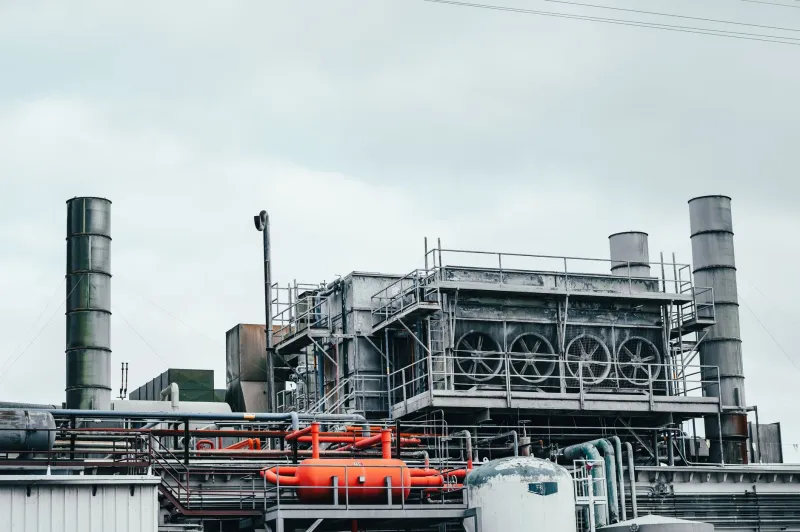
The political and economic case for bringing manufacturing back to the United States has never been stronger. The CHIPS and Science Act, the Inflation Reduction Act, and persistent disruptions in global supply chains have collectively redirected billions of dollars toward domestic production capacity. Manufacturers are signing leases, hiring workforces, and commissioning new facilities at a rate not seen in decades.
What the press releases rarely mention is what happens when the equipment arrives and the network doesn't.
For a growing number of companies executing reshoring strategies, the discovery comes late and expensively: the domestic facilities they have selected—retrofitted warehouses, former automotive plants, greenfield sites in secondary markets—lack the operational technology infrastructure that modern industrial computing demands. The broadband connectivity is inconsistent. The edge computing architecture doesn't exist. The OT network standards are either absent or decades out of date. The vision of a seamlessly connected, data-driven American factory runs directly into the reality of industrial infrastructure that was never designed to support it.
The Infrastructure Assumption That Reshoring Exposed
When manufacturers operated overseas, many relied on facilities that had been purpose-built or substantially modernized by host-country partners and economic development authorities. Factories in Taiwan, South Korea, and parts of China were often equipped with high-density network infrastructure, standardized industrial communication protocols, and on-site technical support ecosystems that manufacturers absorbed without fully accounting for them.
Returning to the US, those same manufacturers are discovering that comparable infrastructure cannot be assumed. Rural and semi-rural locations, frequently selected for their available real estate and labor costs, often sit outside the reach of enterprise-grade connectivity. Industrial parks developed in the 1980s and 1990s carry electrical and networking infrastructure that was never designed to support the data throughput requirements of a modern connected factory. A facility that appears adequate on a site survey can reveal critical deficiencies the moment production-scale IoT devices, real-time monitoring systems, and edge processing nodes are introduced.
"We assumed the hard part was the supply chain transition," said an operations executive at a consumer electronics assembler that relocated a production line from Shenzhen to a facility in the Tennessee Valley. "We had the equipment. We had the people. What we didn't have was the network to run it. We spent four months and nearly two million dollars building infrastructure we had taken for granted overseas."
Edge Computing as a Non-Negotiable
Modern industrial operations are, at their core, data operations. Real-time quality inspection, machine health monitoring, production scheduling optimization, and energy management all depend on the ability to process significant volumes of sensor data at or near the point of generation. That requirement places edge computing infrastructure—local processing nodes capable of handling latency-sensitive workloads without routing data to a distant cloud—at the center of any serious reshoring technology plan.
Yet edge computing readiness is precisely the capability that most legacy domestic facilities lack. Without it, manufacturers face an uncomfortable choice: either deploy cloud-dependent architectures that introduce latency and connectivity vulnerabilities incompatible with real-time production demands, or operate with significantly diminished data visibility—effectively running a modern factory on an analog-era information model.
The facilities that are handling this transition most effectively are those that approached infrastructure investment as the first phase of reshoring, not the last. Rather than fitting technology around an existing building, they assessed the computing and connectivity requirements of their target operations and selected or developed sites accordingly. That sequence—technology requirements first, facility selection second—is a meaningful departure from traditional site selection methodology, but it reflects the operational reality of what manufacturing now demands.
Network Reliability as a Competitive Variable
Industrial network reliability in a reshored facility is not merely an IT concern. It is a production variable with direct financial consequences. Unplanned network interruptions in a connected manufacturing environment cascade rapidly: automated quality control systems go offline, machine health alerts fail to transmit, production scheduling tools lose real-time visibility, and operators revert to manual processes that introduce error and delay.
For manufacturers whose competitive positioning depends on the output quality and production efficiency advantages that modern industrial computing enables, network unreliability effectively neutralizes the technology investment. A predictive maintenance platform is only valuable when its sensors are continuously transmitting. A real-time production dashboard is only actionable when its data feed is uninterrupted.
This reality is pushing manufacturers to invest in redundant connectivity architectures—combining fiber, private LTE, and in some cases satellite backup—that would have been considered excessive in earlier industrial planning frameworks. The cost of redundancy, once weighed against the cost of a single significant production disruption, has become straightforward to justify.
What a Realistic Reshoring Technology Plan Looks Like
Manufacturers approaching reshoring as a technology challenge, rather than purely a logistics and labor challenge, are arriving at a more structured framework for infrastructure investment. The assessment begins with a comprehensive audit of the target facility's existing OT infrastructure—network topology, power systems, physical mounting and cooling capacity for computing hardware, and connectivity to regional carriers.
From that baseline, the gap analysis identifies the delta between current capability and the requirements of the intended operation. That gap becomes the technology investment roadmap: edge computing node deployment, industrial networking upgrades, cybersecurity architecture appropriate to an OT environment, and integration with enterprise systems.
The manufacturers who have completed this process describe it as unexpectedly clarifying. The infrastructure investment, once scoped accurately, becomes a quantifiable cost that can be evaluated against the long-term operational and supply chain benefits of domestic production. The uncertainty disappears. The decision becomes financial rather than speculative.
Reshoring is not merely a political aspiration or a supply chain hedge. For American manufacturers, it is becoming a full-scale operational reinvention—one that demands the same rigor and investment applied to any other major technology transformation. The companies that recognize this early will be positioned to capture the full competitive value of domestic production. Those that do not will spend their first years in a new facility building what they should have built before they moved in.