Drowning in Data, Starving for Answers: How Sensor Overload Is Hiding the Real Causes of Production Slowdowns
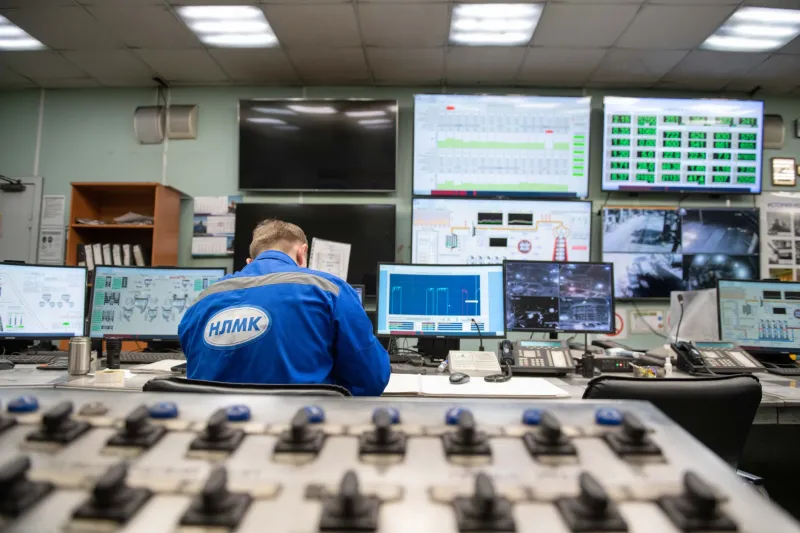
Walk the floor of almost any mid-to-large American manufacturing facility today and the instrumentation is remarkable. Temperature probes, vibration monitors, pressure transducers, optical scanners, RFID readers — sensors of every description feed a continuous stream of readings into historians, SCADA systems, and cloud dashboards. Plant managers can call up a live view of hundreds of process variables from a tablet in the break room. On paper, visibility has never been better.
Yet in boardrooms and operations centers from the Midwest to the Gulf Coast, a quietly frustrating conversation keeps repeating itself: production targets are missed, throughput slips by four or six percent, and nobody can say with confidence exactly why. The sensors are running. The dashboards are populated. The data is there. So where are the answers?
The uncomfortable truth is that sensor density and operational clarity are not the same thing — and confusing the two may be one of the most expensive mistakes American manufacturers are making right now.
The Confidence Problem Hidden Inside Your Dashboard
When a facility installs several hundred additional sensors over a two-year modernization cycle, leadership naturally feels better informed. Alarm thresholds get set, trend charts get built, and weekly review meetings start featuring more colorful graphs. This creates what might be called instrumentation confidence — a belief that because the plant is generating more data, it is also generating more understanding.
Instrumentation confidence is seductive and, in many cases, actively misleading. A vibration reading from a conveyor motor tells you that the motor is vibrating. It does not tell you whether that vibration is causing a downstream accumulation problem, whether the accumulation is interacting with a scheduling decision made three shifts ago, or whether the net effect is a fifteen-minute delay compounding across six workstations. Each individual sensor is doing its job. The system as a whole remains opaque.
Research consistently shows that manufacturers operating at world-class overall equipment effectiveness (OEE) levels do not necessarily have more sensors than their underperforming counterparts. What they have is better data architecture — systems designed to relate individual measurements to one another, to production schedules, to quality outcomes, and to asset history. The sensor is the starting point, not the destination.
Why Bottlenecks Hide in Plain Sight
Production bottlenecks are notoriously difficult to isolate in complex, multi-stage manufacturing environments. Part of the difficulty is temporal: the point where a line slows down is frequently not the point where the root cause originates. A stamping press that starves for material at 2:00 PM may be suffering the consequences of a material handling delay that occurred at 11:30 AM in a completely different section of the facility.
Conventional sensor deployments are designed to monitor individual assets, not to trace causal chains across assets, time, and process stages. When data from those sensors lives in separate systems — a PLC historian here, a quality management platform there, a maintenance CMMS somewhere else — the causal chain becomes nearly impossible to reconstruct in real time. Operators see symptoms. They rarely see causes.
This fragmentation is compounded by alarm fatigue. When a facility generates thousands of alerts per shift, many of which are nuisance alarms or low-priority notifications, operations staff develop a rational coping mechanism: they tune out the noise. The critical signal — the early warning that a constraint is forming three workstations ahead — gets lost in the volume. More sensors, paradoxically, can make the signal-to-noise problem worse rather than better.
The Contextualization Gap
The manufacturers consistently achieving superior throughput and responsiveness share a common characteristic: they have invested as seriously in data contextualization as they have in data collection. Contextualization means giving every data point a meaningful relationship to the broader production picture — connecting a machine reading to the part being processed, the operator running the equipment, the shift schedule, the quality specification, and the customer order downstream.
This is not a trivial undertaking. It requires deliberate integration work between operational technology (OT) systems and information technology (IT) platforms. It requires a unified data model that can accommodate both the millisecond timestamps of machine telemetry and the longer time horizons of production planning. And it requires analytics that are built specifically for manufacturing workflows, not generic business intelligence tools repurposed for the plant floor.
Edge computing plays a meaningful role here. Processing data at or near the source — before it travels to a central server or cloud environment — allows facilities to apply contextual logic in real time, at the point where it matters most. An edge platform that understands the relationship between upstream buffer levels, cycle time variability, and downstream demand can surface a constraint warning in seconds rather than waiting for a human analyst to notice a trend in a next-day report.
What High-Performing Plants Do Differently
Facilities that have moved beyond the sensor proliferation trap tend to approach operational visibility as an architectural problem rather than a hardware problem. A few distinguishing practices stand out.
They define decisions before they deploy sensors. Rather than instrumenting broadly and hoping insight will emerge, leading manufacturers begin with the question: what decisions do we need to make faster or more accurately? The sensor strategy follows from that answer. This discipline prevents the accumulation of data that is technically available but operationally irrelevant.
They build unified data pipelines across OT and IT. Connecting machine-level data to ERP systems, quality databases, and scheduling tools is complex, but it is the foundation of genuine visibility. Without this integration, even the most sophisticated analytics tools are working with an incomplete picture.
They treat latency as a design constraint. The value of bottleneck detection degrades rapidly with time. A warning that arrives two hours after a constraint forms may be informative for a post-shift debrief, but it cannot influence real-time decisions. High-performing operations design their data flows around the time horizon of the decisions they support.
They invest in operator-level clarity, not just executive dashboards. The person best positioned to respond to an emerging bottleneck is usually the one standing closest to it. Facilities that surface actionable, contextualized alerts at the workstation level — rather than aggregating everything into a management dashboard — close the loop between detection and response far more effectively.
Rethinking What Visibility Actually Means
The sensor revolution in American manufacturing has delivered genuine value, and there is no argument for instrumenting less. But the next competitive frontier is not more data — it is better intelligence from the data already being collected. The manufacturers who will lead their sectors over the next decade are not those with the most sensors per square foot. They are those who have built the contextual, integrated, and low-latency data environments that turn raw readings into production advantage.
Visibility, properly understood, is not the ability to see everything. It is the ability to see what matters, when it matters, with enough clarity to act. For most American manufacturers today, closing that gap is less a technology procurement challenge than a strategic architecture challenge — and recognizing the distinction is the first step toward solving it.