Operational Blindspots: Why Real-Time Data Alone Isn't Giving Factory Managers the Answers They Need
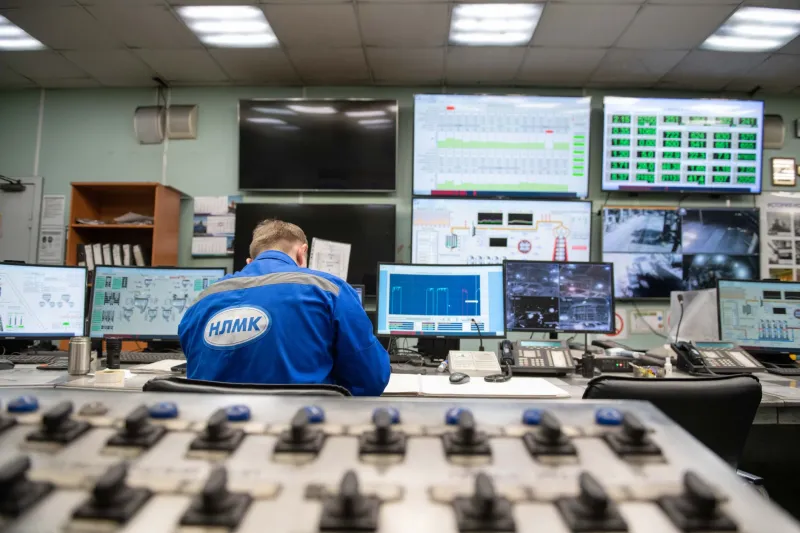
Walk into almost any mid-to-large American manufacturing facility today and the equipment inventory will tell an optimistic story. Networked sensors on conveyors. SCADA terminals monitoring process variables. MES dashboards refreshing every few seconds. On paper, these operations look thoroughly instrumented. In practice, plant managers are still getting blindsided by failures they should have seen coming days in advance.
This is the quiet contradiction at the center of modern industrial operations: facilities have invested heavily in connectivity, yet decision-makers continue to operate with dangerously incomplete pictures of what is actually happening on the shop floor. The problem is not a shortage of data. It is the persistent inability to convert that data into intelligence that is both timely and contextually meaningful.
The Illusion of Visibility
The term "real-time visibility" has become so common in industrial technology marketing that it has largely lost its precision. Vendors use it to describe everything from a sensor that logs a reading every thirty seconds to a fully integrated analytics platform processing thousands of data streams simultaneously. Plant managers, understandably, assume they have achieved visibility once they have installed monitoring hardware and connected it to a display. What they have actually achieved is data collection—a necessary but insufficient first step.
Consider a typical scenario: a production line experiences an unexpected stoppage at 2:00 a.m. The SCADA system recorded the exact moment the line went down. Maintenance logs show the equipment had been running within normal temperature parameters as recently as forty minutes prior. Yet a closer examination of vibration data from a bearing assembly—data that existed but was never aggregated or analyzed against historical baselines—would have revealed a degradation pattern that began three days earlier. The data was there. The intelligence was not.
This distinction matters enormously. Data tells you that something happened. Intelligence tells you why it happened, when it was likely to happen, and what conditions contributed to it. Without that interpretive layer, even a facility blanketed in sensors is effectively flying blind.
Why SCADA Systems Fall Short of the Modern Demand
Supervisory Control and Data Acquisition systems have served industrial operations reliably for decades, and they continue to perform their core function—monitoring and controlling physical processes—with considerable effectiveness. The challenge is that SCADA architecture was designed for a different era of manufacturing, one in which the primary goal was process stability rather than enterprise-wide optimization.
Traditional SCADA platforms are typically siloed by design. A system monitoring a paint line does not inherently communicate with the system managing upstream assembly operations or the ERP platform tracking order fulfillment schedules. Each system speaks its own language, stores data in its own format, and surfaces information through its own interface. When a plant manager needs to understand the relationship between a quality deviation on Line 3 and a supplier component batch received Tuesday, assembling that picture requires manual effort across multiple systems—effort that rarely happens in real time and almost never happens proactively.
The result is what operations professionals sometimes call "dashboard paralysis": a proliferation of monitoring screens that individually display accurate information but collectively fail to provide a coherent operational narrative. Managers know the temperature of the oven. They know the throughput rate of the press. What they do not know—without significant manual investigation—is how those variables interact with one another and with business outcomes.
The Fragmentation Tax
The cost of this fragmented intelligence model is not always visible on a single line of a P&L statement, but it accumulates steadily across several dimensions.
Unplanned downtime remains the most direct expense. Industry estimates consistently place the cost of unplanned manufacturing downtime in the United States at tens of billions of dollars annually, with individual incidents costing mid-sized facilities anywhere from tens of thousands to hundreds of thousands of dollars per hour depending on the production context. When warning signals exist in the data but are not surfaced to decision-makers in time to act, those costs are largely preventable—yet they recur.
Quality escapes represent a second, often underestimated dimension. When process variables drift outside acceptable ranges and the drift is not caught until a downstream quality check—or worse, until a customer complaint—the cost extends beyond rework and scrap to include warranty claims, customer relationship damage, and potential regulatory exposure in industries such as food processing, pharmaceuticals, and automotive supply.
Labor efficiency is a third area of impact. When supervisors and engineers spend significant portions of their shifts manually reconciling data from disparate systems, investigating incidents that integrated analytics could have flagged automatically, or generating reports that pull information from multiple sources by hand, the organization is paying premium wages for work that should be handled by the technology infrastructure itself.
What Integrated Industrial Intelligence Actually Looks Like
The manufacturing facilities that have moved beyond the visibility illusion share a common architectural approach: they have replaced or supplemented their fragmented monitoring systems with platforms capable of aggregating data across operational domains and applying analytical logic that produces actionable outputs rather than raw readings.
In practical terms, this means edge computing infrastructure that processes data at or near the source—on the plant floor itself—rather than routing everything to a central server or cloud environment where latency and bandwidth constraints limit responsiveness. It means protocol normalization that allows data from equipment manufactured in different decades, by different vendors, using different communication standards, to be understood within a single analytical framework. And it means contextual intelligence layers that apply machine learning models, statistical process control logic, and business rule sets to translate operational signals into specific, prioritized recommendations for human decision-makers.
A maintenance technician equipped with this kind of intelligence does not receive a generic alert that a motor's temperature has exceeded a threshold. They receive a notification that a specific motor on a specific line is exhibiting a vibration and temperature signature consistent with bearing wear, that historical data suggests failure probability is elevated within the next seventy-two hours, and that the recommended maintenance window based on current production scheduling is the upcoming Saturday morning shift change. The difference in operational value between those two types of communication is substantial.
Moving From Connected to Intelligent
For American manufacturers evaluating their current operational intelligence posture, the relevant question is not whether their facilities are connected. Most are, to varying degrees. The more productive question is whether the connectivity they have invested in is generating intelligence that consistently reaches the right people, in the right form, at the right time to influence decisions before consequences materialize.
Facilities that cannot answer that question affirmatively are paying a hidden tax—in downtime, quality costs, and labor inefficiency—that does not appear on any invoice but is nonetheless very real. The technology to eliminate that tax exists, is proven in production environments across multiple industries, and is increasingly accessible to manufacturers at a range of scales and capital budgets.
The factories that will define American industrial competitiveness over the next decade will not simply be the ones with the most sensors. They will be the ones that have built the intelligence infrastructure to make sense of what those sensors are saying—and act on it decisively.