Fragmented by Design: How Isolated Machines Are Quietly Undermining American Manufacturing Performance
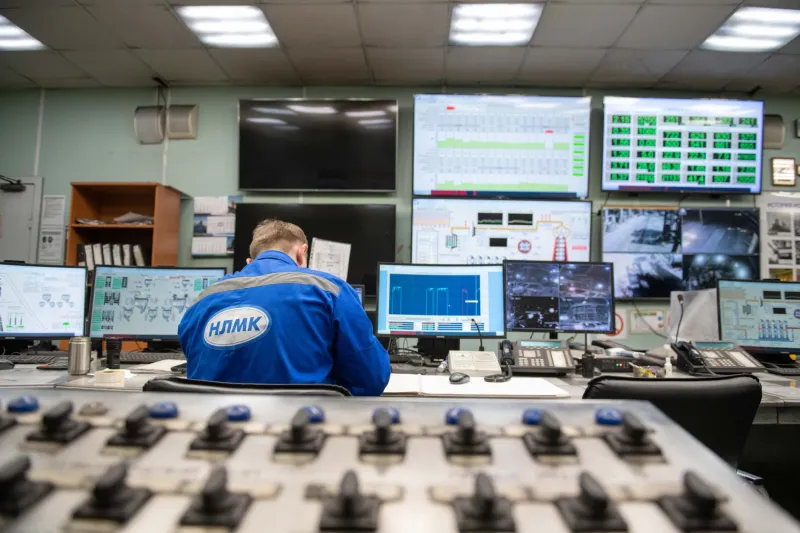
Walk through almost any mid-sized American manufacturing facility and you will encounter a paradox. The plant hums with sophisticated equipment — CNC machines, programmable logic controllers, conveyor systems, environmental sensors — yet the people responsible for running that facility often cannot answer basic operational questions in real time. How much throughput did Line 3 produce in the last four hours? Which piece of equipment is most likely to fail before the end of the week? Where exactly is yield degrading, and why?
The inability to answer these questions is rarely a symptom of poor management. More often, it is the predictable consequence of a fragmented infrastructure — one in which machines, software platforms, and data repositories were installed over decades, each chosen for its individual merit, none designed to communicate with the others.
This is the silo problem. And for US manufacturers competing in an increasingly data-driven global market, it is far more costly than most leadership teams recognize.
The Architecture of Blindness
Industrial silos form gradually and, in many cases, logically. A plant installs a SCADA system to monitor one production line. Years later, a new ERP platform is deployed to manage inventory and procurement. A quality management system is added to satisfy regulatory requirements. Each investment is justified on its own terms, and each delivers measurable value within its defined scope.
The problem emerges at the boundaries. When these systems cannot share data automatically, the information generated by each one remains trapped inside it. A maintenance technician reviewing equipment runtime data in one platform has no visibility into the production schedule stored in another. A quality engineer analyzing defect rates cannot easily correlate findings with environmental conditions tracked by a separate sensor network. The plant generates enormous volumes of operational data every day — and almost none of it flows where it would be most useful.
The practical consequence is that decision-making defaults to approximation. Supervisors rely on manual reports compiled from multiple sources, often hours after the fact. Managers make scheduling decisions based on incomplete pictures of current capacity. Executives review performance dashboards that reflect last week's reality, not this moment's.
What Fragmentation Actually Costs
The financial impact of disconnected systems is rarely captured on a single line of a balance sheet, which is precisely why it persists. The costs are distributed across the organization and embedded in outcomes that appear to have other causes.
Unplanned downtime is perhaps the most visible expense. When condition monitoring data from individual machines cannot be aggregated and analyzed holistically, early warning signs go undetected. A bearing running slightly hotter than optimal, a vibration pattern that has been shifting incrementally over three weeks — these signals exist in the data, but they never reach an analyst capable of acting on them. The result is reactive maintenance: equipment fails, production stops, and the cost of emergency repair compounds the cost of lost output.
Yield losses represent another category of hidden expense. In manufacturing environments where quality data and process data are managed by separate systems, identifying the root cause of a defect spike requires time-consuming manual investigation. By the time the correlation between a specific process variable and a quality outcome is established, thousands of units may already have been produced outside specification.
Labor efficiency suffers as well. When operators and engineers spend significant portions of their shifts compiling data from multiple systems, reconciling discrepancies, and producing reports manually, they are not applying their expertise to the problems that most need human judgment. The opportunity cost of this administrative burden is substantial, even if it rarely appears as a discrete line item.
The Visibility Gap and Its Strategic Consequences
Beyond the immediate financial costs, fragmented systems create a strategic disadvantage that compounds over time. Manufacturers that lack unified operational visibility cannot optimize at the system level — they can only optimize within silos. A change that improves throughput on one line may create a bottleneck elsewhere, and without cross-system visibility, that downstream effect may not be detected for days.
This limitation becomes particularly consequential as customer expectations evolve. Increasingly, industrial buyers and contract manufacturers are expected to provide real-time production status, traceability documentation, and quality certification data on demand. Meeting these requirements is straightforward when operational data flows through an integrated platform. It is enormously burdensome when that data must be manually assembled from six different systems every time a customer or auditor requests it.
There is also a workforce dimension. As experienced operators and technicians retire, the institutional knowledge they carry — the informal understanding of how different systems interact, which anomalies matter, which workarounds are necessary — leaves with them. Integrated industrial platforms can encode and preserve that knowledge in ways that fragmented systems fundamentally cannot.
Toward an Integrated Operational Picture
The solution to industrial fragmentation is not necessarily a wholesale replacement of existing infrastructure. For most manufacturers, a complete greenfield deployment is neither financially feasible nor operationally practical. The more realistic path involves deploying integration layers and industrial IoT platforms that connect existing systems, normalize their data outputs, and present a unified operational view.
Edge computing hardware plays a critical role in this architecture. By placing intelligent processing nodes close to the machines themselves, manufacturers can aggregate data from diverse equipment types — regardless of the communication protocols those machines use — and transmit structured, contextualized information to centralized analytics platforms. This approach preserves existing capital investments while dramatically expanding operational visibility.
Modern industrial integration platforms can ingest data from legacy PLCs, newer networked sensors, ERP systems, and quality management tools simultaneously, applying common data models that make cross-system analysis possible. When a quality anomaly appears, the platform can automatically surface correlated process variables, maintenance records, and environmental conditions — compressing hours of manual investigation into seconds of automated analysis.
The organizational impact of this kind of visibility extends well beyond the maintenance department. Operations managers gain the ability to make scheduling decisions based on real-time capacity and equipment health data. Supply chain teams can adjust procurement based on actual consumption rates rather than projected ones. Executive leadership can monitor true operational performance rather than the lagging indicators that fragmented reporting typically produces.
The Competitive Calculus
American manufacturers face persistent pressure from lower-cost global competitors, rising input costs, and increasing supply chain complexity. In this environment, operational inefficiency is not merely an internal problem — it is a competitive liability. Every percentage point of yield lost to undetected process variation, every hour of downtime that could have been prevented with better data, every labor hour spent compiling reports instead of solving problems, represents margin that competitors are capturing instead.
The manufacturers gaining ground in this environment share a common characteristic: they have made the deliberate choice to treat operational data as a strategic asset rather than a byproduct. They have invested in the infrastructure necessary to connect their machines, unify their data, and make that information available to the people and systems positioned to act on it.
For facilities still operating in fragmented environments, the question is no longer whether integration is worth pursuing. The question is how much longer the status quo can be sustained before the accumulated costs of disconnection become impossible to ignore.