Every Minute Counts: The True Financial Weight of Unplanned Downtime in American Manufacturing
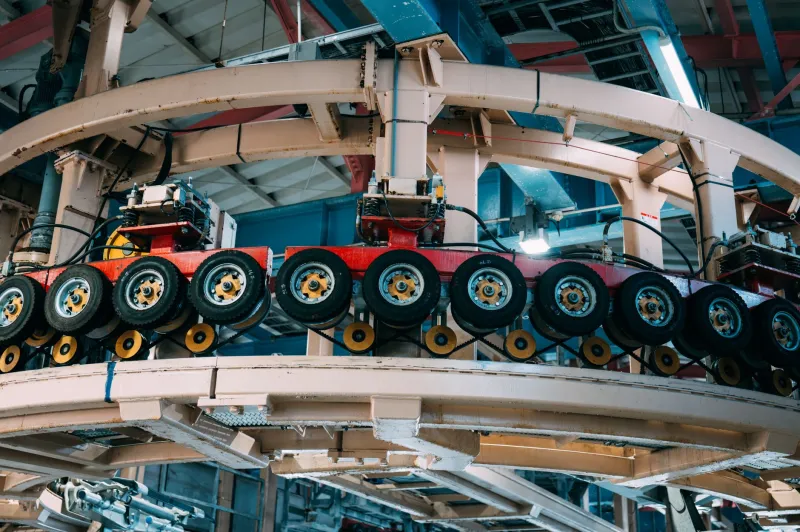
There is a number that many plant managers know instinctively but rarely see written down in full: the per-minute cost of an unplanned production stoppage. For a mid-scale automotive components manufacturer, that figure can exceed $5,000 per minute. For a continuous-process chemical facility, it climbs higher still. Across American industry broadly, analysts at Aberdeen Research have estimated that unplanned downtime costs manufacturers an average of $260,000 per hour — a figure that, when annualized across recurring failure events, represents a structural drain on profitability that no efficiency initiative elsewhere in the operation can fully offset.
What makes this figure particularly significant is not its size in isolation, but its trajectory. As equipment ages, as production schedules tighten, and as supply chains operate with diminishing buffer inventory, the downstream consequences of a single unplanned stoppage have grown substantially more severe. A failure that once disrupted one shift now routinely cascades into missed delivery windows, expedited freight charges, customer penalty clauses, and unplanned overtime — costs that rarely appear in the same ledger as the original maintenance event, but are nonetheless directly attributable to it.
The Anatomy of a Downtime Event
The visible cost of unplanned downtime — idle labor, lost throughput, wasted materials — is only the surface layer. Beneath it lies a more complex financial structure that manufacturers frequently underestimate when building their maintenance ROI models.
Consider a typical failure sequence at a discrete manufacturing facility. A critical conveyor drive unit fails mid-shift. The immediate response involves halting the line, summoning maintenance personnel, and diagnosing the fault. If the required replacement component is not in local inventory — a common scenario given the lean stocking practices most facilities have adopted — procurement lead times introduce additional delays. Meanwhile, downstream workstations sit idle, shift supervisors begin rescheduling labor, and production planning scrambles to revise shipment commitments.
By the time the line restarts, the direct cost of the repair itself may represent less than 15 percent of the total financial impact. The remainder is distributed across labor inefficiency, schedule disruption, expedited logistics, and, in customer-facing scenarios, potential contractual penalties. For manufacturers supplying just-in-time assembly operations — particularly in automotive and aerospace sectors — the reputational consequences of a missed delivery can extend well beyond the immediate event.
Why Traditional Maintenance Models Are No Longer Sufficient
For decades, American manufacturers have operated under one of two maintenance philosophies: run-to-failure, in which equipment is operated until it breaks and then repaired, or time-based preventive maintenance, in which components are serviced on fixed schedules regardless of actual condition. Both approaches carry inherent inefficiencies.
Run-to-failure is self-evidently reactive, generating exactly the category of unplanned events described above. Time-based preventive maintenance, while more disciplined, introduces a different form of waste: components are frequently replaced before their service life is exhausted, generating unnecessary parts costs and labor hours, while other components that degrade faster than the schedule anticipates still fail unexpectedly.
What neither model provides is the one capability that modern industrial environments genuinely require — the ability to anticipate failure before it occurs, with sufficient lead time to plan an intervention that minimizes production disruption. That capability is the defining value proposition of condition-based and predictive maintenance frameworks, and it is precisely where industrial intelligence platforms have begun to demonstrate measurable return on investment.
Predictive Maintenance: From Concept to Operational Reality
The shift toward predictive maintenance is not new as a concept. What is new is the practical accessibility of the technology required to implement it at scale. Edge computing hardware deployed at the machine level can now continuously monitor vibration signatures, thermal profiles, current draw anomalies, and acoustic emissions from critical assets — feeding that data to analytics engines capable of identifying degradation patterns weeks before they manifest as failures.
Industrial IoT platforms consolidate these sensor streams into unified dashboards, enabling maintenance teams to prioritize interventions based on actual risk rather than fixed schedules. When an edge device on a pump motor detects a bearing vibration signature consistent with early-stage wear, a work order can be generated, parts can be pre-positioned, and the repair can be scheduled during a planned maintenance window — all before the component reaches the failure threshold that would have triggered an unplanned stoppage.
The financial impact of this shift is well-documented. McKinsey & Company has reported that predictive maintenance programs in manufacturing environments typically reduce unplanned downtime by 30 to 50 percent, extend equipment life by 20 to 40 percent, and reduce overall maintenance costs by 10 to 25 percent. For a facility that currently spends $2 million annually on maintenance-related costs — including both direct expenses and downtime losses — those percentages represent a substantial and recurring financial benefit.
Recalculating the ROI of Industrial Intelligence
One of the persistent barriers to predictive maintenance adoption has been the perceived complexity of the ROI calculation. Plant managers accustomed to evaluating capital expenditures on straightforward payback periods have sometimes struggled to quantify benefits that are, by definition, events that did not happen.
The analytical framework is, however, more tractable than it initially appears. The starting point is an accurate baseline of current downtime frequency, duration, and total cost — a figure that most manufacturers can construct from maintenance logs, production records, and accounting data, provided those systems are integrated sufficiently to capture the full cost picture. Against that baseline, the projected downtime reduction from a predictive maintenance program can be modeled using industry benchmarks, then translated into a dollar figure that reflects the specific cost structure of the facility.
What this analysis typically reveals is that the capital investment required for industrial IoT sensors, edge computing hardware, and analytics software is recovered within 12 to 24 months at most facilities — and often considerably faster at those with high asset intensity or frequent failure histories. Beyond the payback period, the ongoing financial benefit compounds: each avoided unplanned event represents not just a repair cost saved, but a production schedule protected, a customer commitment honored, and a maintenance team deployed on planned rather than emergency work.
The Strategic Dimension
Beyond the facility-level financial case, there is a broader strategic dimension to how manufacturers approach downtime that is increasingly shaping competitive positioning. In an environment where domestic manufacturing is under sustained pressure to demonstrate cost competitiveness relative to lower-wage production regions, operational reliability has become a differentiating factor. Customers who depend on consistent, on-time delivery are increasingly evaluating their supplier relationships through the lens of supply chain resilience — and a manufacturer with a demonstrable track record of operational continuity commands a meaningfully stronger position than one whose delivery reliability is subject to the unpredictability of reactive maintenance.
The manufacturers who are investing in industrial intelligence platforms today are not simply solving a maintenance problem. They are building an operational foundation that supports higher asset utilization, more accurate production planning, and stronger customer relationships — a combination that translates directly into sustainable competitive advantage.
Unplanned downtime has always been costly. What is changing is that the tools required to address it systematically are now within reach of manufacturers at virtually every scale. The question is no longer whether the investment is justified. The question is how much longer the alternative remains affordable.