Hired for Yesterday's Factory: How the Industrial Computing Talent Shortage Is Becoming a Production Crisis
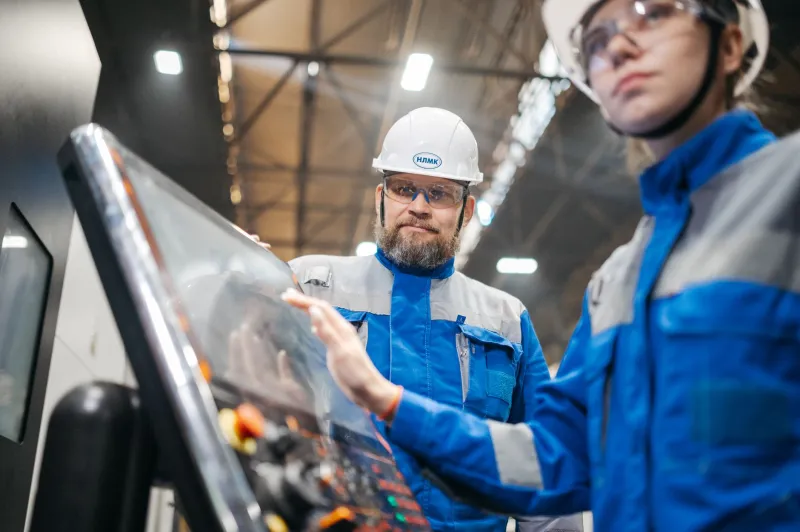
American manufacturers have spent the better part of the past decade retrofitting their facilities with sophisticated industrial computing infrastructure — edge devices, IoT-enabled sensors, real-time monitoring dashboards, and AI-assisted control systems. The hardware investments have been substantial. The software deployments have been complex. And yet, on factory floors from Ohio to Texas, a quieter problem is beginning to surface: the people needed to run these systems competently are increasingly difficult to find, and even harder to keep.
The industrial computing talent shortage is not a future concern. For a growing number of plant managers and operations directors, it is already a present-day constraint on production output, system reliability, and competitive positioning.
The Mismatch Between Modern Systems and Available Skill Sets
For decades, industrial operations depended on workers who understood mechanical systems, pneumatic controls, and legacy programmable logic controllers. That knowledge base remains valuable, but it is no longer sufficient. Today's manufacturing environment demands fluency in networked computing architectures, real-time data interpretation, cybersecurity fundamentals for operational technology environments, and the ability to interact with software platforms that govern everything from predictive maintenance alerts to enterprise resource planning integrations.
The challenge is that the educational pipeline has not kept pace with this transformation. Community college technical programs, trade certifications, and even four-year engineering curricula have been slow to incorporate industrial IoT competencies, edge computing principles, and the specific software ecosystems that dominate modern production environments. The result is a labor market where candidates frequently arrive with credentials that reflect an earlier era of manufacturing — capable on paper, but underprepared for the systems they will actually encounter on the floor.
This mismatch carries direct operational consequences. When a machine learning-driven quality control system flags an anomaly, someone must interpret that alert within the context of the broader production workflow and respond appropriately. When an edge computing node requires configuration updates, a technician needs to understand not just the device itself but how it communicates with upstream systems. These are not abstract technical skills — they are daily operational requirements, and gaps in coverage can translate to unplanned downtime, misdiagnosed equipment faults, and degraded product quality.
Why This Looks Like a Supply Chain Problem
Manufacturers are accustomed to thinking about supply chain risk in terms of raw materials, logistics, and vendor reliability. The talent shortage in industrial computing deserves a place in that same risk framework. When a production line goes offline because no available technician is qualified to address a controls failure, the downstream consequences — missed shipments, strained customer relationships, expedited freight costs — mirror those of a conventional supply disruption.
The analogy extends further. Just as supply chain professionals work proactively to diversify suppliers and build redundant capacity, manufacturers must now think about workforce capability with similar intentionality. Waiting until a vacancy appears or a system fails to address training gaps is the operational equivalent of ordering critical components only after a stockout has already occurred.
Some manufacturers are beginning to recognize that their technology upgrade decisions and their workforce development strategies cannot be managed in isolation. The companies deploying new industrial computing platforms without a parallel investment in human capability are, in effect, creating a form of internal supply chain fragility — one that may not be immediately visible but will eventually manifest as a production bottleneck.
Strategies That Forward-Thinking Manufacturers Are Deploying
A number of approaches have gained traction among manufacturers that are taking this challenge seriously.
Vendor-Backed Certification Programs
Several industrial computing platform providers now offer structured certification tracks designed to build competency in their specific ecosystems. These programs range from foundational courses covering hardware installation and network configuration to advanced tracks focused on software integration and data analytics. Manufacturers that formalize partnerships with technology vendors — negotiating access to training resources as part of procurement agreements — are finding that they can build internal expertise more efficiently than relying on the open labor market alone.
Community College and Technical School Partnerships
A growing number of manufacturers are working directly with regional educational institutions to shape curriculum content. By providing equipment for training labs, offering internship placements, and participating in advisory boards, these companies are helping to ensure that graduates enter the workforce with exposure to the platforms and systems they will actually use. This approach requires a longer time horizon, but it builds a more sustainable local talent pipeline and strengthens the manufacturer's presence as a preferred employer in the region.
Internal Upskilling of Existing Workforce
For many organizations, the most practical near-term strategy involves developing the people already on the payroll. Experienced technicians and operators who understand the physical production environment bring contextual knowledge that is genuinely difficult to teach. Layering industrial computing competencies onto that foundation — through structured training schedules, mentorship pairings with technically proficient colleagues, and access to self-paced learning platforms — can produce capable personnel faster than external hiring in many cases.
Retention is the critical companion to upskilling. Manufacturers that invest in developing employees but fail to recognize that growth through compensation adjustments, career advancement opportunities, or expanded responsibilities often find that their newly trained workers are recruited away by competitors or technology vendors. The investment in training must be accompanied by a deliberate retention strategy.
Cross-Functional Knowledge Sharing
Some facilities are restructuring how knowledge flows internally by creating formal mechanisms for IT and OT teams to collaborate. Engineers who understand enterprise software and network infrastructure are being paired with operations technicians who know the production floor. This cross-functional exchange builds broader organizational competency and reduces dependence on any single individual whose departure could leave a critical knowledge gap.
The Competitive Dimension
It is worth stating plainly that the manufacturers who resolve this talent challenge first will hold a meaningful competitive advantage. Industrial computing proficiency enables faster troubleshooting, more effective utilization of predictive maintenance capabilities, better data-driven decision-making, and greater agility when production requirements shift. All of these translate into cost efficiencies and service reliability that directly affect market position.
Conversely, companies that continue to treat workforce development as a secondary concern — something to address after the technology is installed and running — risk finding that their capital investments underperform. A sophisticated industrial computing platform operated by an undertrained workforce will not deliver the productivity gains or the ROI that justified the investment in the first place.
Aligning Technology Decisions With Talent Strategy
The most effective posture is one that integrates workforce planning into technology decision-making from the outset. When evaluating new industrial computing platforms, manufacturers should be asking not only about technical specifications and vendor support terms, but also about the training resources available, the complexity of the learning curve, and the availability of qualified personnel in their region.
Some organizations are finding value in phased deployment approaches that allow workforce training to advance in parallel with system rollout, rather than scrambling to close skill gaps after full implementation. Others are building dedicated internal roles — sometimes called industrial technology coordinators or OT training leads — responsible specifically for managing the human side of technology adoption.
The underlying principle is straightforward: technology investments and talent investments must be treated as two sides of the same strategic decision. In a manufacturing environment where operational precision is the difference between profitability and loss, neither can afford to lag behind the other.