Reshoring's Hidden Cost: When New Factories Run on Old Brains
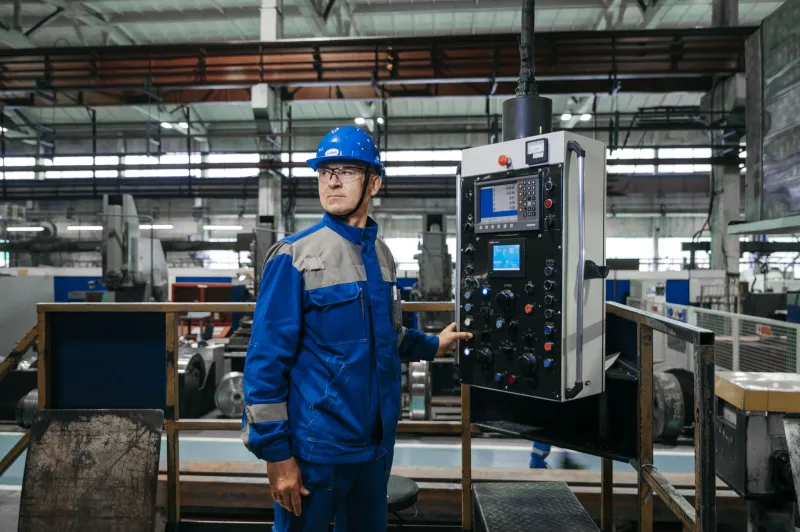
The political and economic case for bringing manufacturing back to the United States has never been stronger. Supply chain disruptions, rising overseas labor costs, federal incentives embedded in recent industrial policy legislation, and a renewed strategic focus on domestic production capacity have combined to make reshoring a compelling proposition for a wide range of industries. Plant announcements are accelerating. Investment commitments are substantial. The narrative of American manufacturing renewal is, in many respects, real.
What the press releases rarely mention is what manufacturers find when they turn on the lights.
Across sectors — from automotive components to electronics assembly to specialty chemicals — companies executing reshoring strategies are encountering the same structural problem: the industrial computing infrastructure available to them on US soil is frequently a generation or more behind what they were operating overseas. The control systems are older. The network architecture is fragmented. The human-machine interfaces reflect design philosophies from the early 2000s. And the integration layer connecting plant-floor operations to enterprise systems is either thin or nonexistent.
This is not a peripheral concern. It is a fundamental threat to the economic rationale for reshoring itself.
The Infrastructure Legacy Problem
To understand why this gap exists, it helps to consider how American manufacturing capacity was managed during the decades when offshoring was the dominant strategy. Facilities that remained operational were often maintained rather than modernized — kept running at acceptable cost rather than upgraded to current capability standards. Capital that might have funded technology refresh cycles went instead toward the offshore operations that were expanding.
When those domestic facilities are now reactivated or repurposed for reshored production, they carry the accumulated technology debt of two decades of deferred investment. A plant that has been running a particular distributed control system since 2003 does not become a modern manufacturing environment simply because new product lines are introduced into it. The underlying computing infrastructure shapes everything that happens above it — cycle times, quality consistency, energy efficiency, maintenance responsiveness, and the ability to generate the kind of operational data that enterprise decision-makers increasingly depend on.
Manufacturers who built or expanded facilities overseas during the same period, by contrast, were often investing in current-generation automation and control technology at the time of installation. The result is a structural asymmetry: facilities in regions that received manufacturing investment in the 2010s may be running control architectures that are meaningfully more capable than the domestic plants now being asked to compete with them.
The Greenfield Illusion
Manufacturers who are building entirely new facilities — rather than reactivating existing ones — might assume they are exempt from this problem. The evidence suggests otherwise.
Greenfield reshoring projects frequently encounter a different version of the same challenge. Compressed timelines, driven by customer commitments or incentive structures tied to production start dates, push procurement teams toward available technology rather than optimal technology. Equipment suppliers with short lead times win contracts over vendors offering superior capability with longer delivery windows. Integration decisions that would benefit from careful architecture planning get made reactively, under schedule pressure.
The outcome is a new facility that looks modern from the outside but contains a patchwork of control and computing systems that were selected for availability rather than coherence. The integration debt accumulates from day one.
What the Overseas Benchmark Actually Looks Like
To appreciate the scale of the gap, it is worth being specific about what current-generation industrial computing infrastructure enables in well-equipped overseas facilities.
Modern control environments in competitive manufacturing regions typically feature edge computing nodes that process machine data locally and in real time, OPC-UA communication standards that allow heterogeneous equipment to share operational data across a unified network, and manufacturing execution systems that maintain live bidirectional communication with both plant-floor equipment and enterprise resource planning platforms. Predictive maintenance analytics run continuously against equipment sensor streams. Energy management systems optimize consumption dynamically against production schedules. Quality data is captured at the point of production and fed automatically into statistical process control frameworks.
None of this is exotic. It represents the current baseline in well-managed industrial environments globally. But achieving it requires a coherent computing architecture — one that most reshored facilities, whether reactivated or greenfield, do not have on day one.
A Parallel-Track Modernization Strategy
The strategic implication is clear: reshoring initiatives that do not include a concurrent industrial computing modernization program are not fully planned. They are relocating production without fully accounting for the technology investment required to make that production competitive.
The most effective approach treats infrastructure modernization not as a follow-on project — something to address once production is stable — but as a parallel workstream that begins at the same time as the physical relocation or construction effort. Several principles guide this approach.
Define the target architecture before selecting equipment. The computing and networking infrastructure that will eventually connect all plant-floor systems should be designed as a coherent whole before individual equipment procurement decisions are made. Retrofitting integration onto systems that were never designed to communicate is significantly more expensive than building interoperability in from the start.
Prioritize the OT network as foundational infrastructure. The operational technology network — the communications layer that connects controllers, sensors, edge devices, and enterprise systems — is the central nervous system of a modern manufacturing facility. Investment in this layer pays dividends across every other technology initiative that follows.
Sequence automation and analytics investments against operational maturity. Advanced predictive analytics capabilities deliver the most value when the underlying data infrastructure is stable and well-characterized. Facilities in early operational stages should focus first on data collection integrity and control system reliability before layering sophisticated analytics on top.
Leverage federal and state incentive programs strategically. Multiple programs under recent US industrial policy legislation include provisions that can offset the cost of technology modernization in domestic manufacturing facilities. Manufacturers who align their infrastructure investment roadmaps with available incentive structures can significantly reduce the net cost of closing the technology gap.
Competing From a Position of Strength
Reshoring is not inherently a competitive disadvantage. American manufacturers who execute the transition thoughtfully — treating industrial computing modernization as integral to the relocation strategy rather than ancillary to it — can build domestic facilities that meet or exceed the capability of the overseas operations they replace.
The manufacturers who will struggle are those who move production home without moving the technology needle. They will find themselves competing with lower labor cost and equivalent technology capability on one side, and higher domestic labor cost with inferior technology capability on the other. That is not a sustainable position.
The infrastructure gap is real. But it is also closeable — for manufacturers willing to plan for it honestly.