Compliance or Consequence: How Smart Manufacturers Are Getting Ahead of the EPA's Next Wave of Industrial Standards
There is a particular kind of pressure that settles over a manufacturing facility when a regulatory deadline moves from abstract to imminent. The EPA's forthcoming revisions to emissions monitoring, energy consumption reporting, and facility-level environmental data standards are no longer a distant policy conversation. For thousands of American manufacturers, they represent a concrete infrastructure challenge — one with a narrowing window for thoughtful response.
The manufacturers who understand this earliest tend to fare best. Those who do not often discover the cost of delay in the worst possible way: rushed vendor contracts, emergency retrofits, and compliance documentation assembled under legal scrutiny.
What the New Standards Actually Require from Industrial Infrastructure
The regulatory changes taking shape at the federal level are not simply about emissions thresholds. They are, in large part, about verification. Regulators are increasingly requiring manufacturers to demonstrate continuous, auditable monitoring of environmental metrics — particulate output, energy draw, refrigerant usage, and effluent discharge among them. This is a fundamentally different ask than periodic manual reporting.
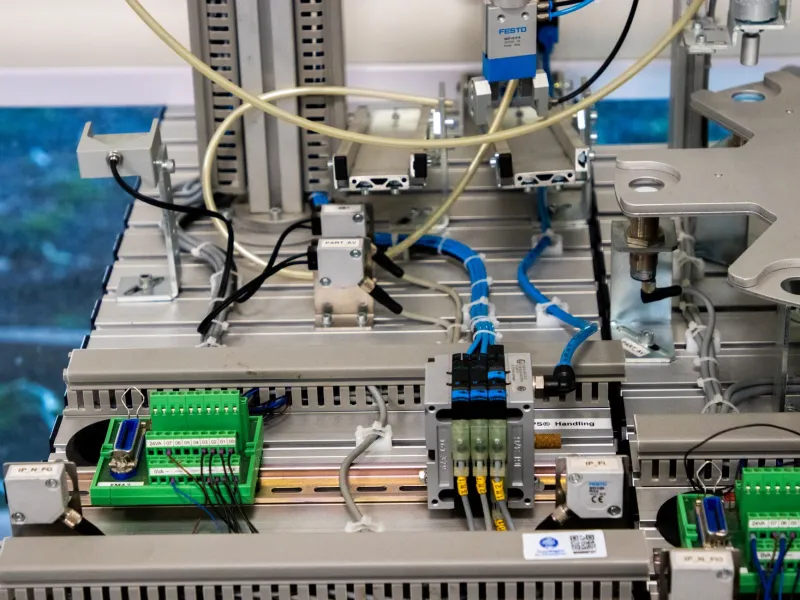
Meeting these verification requirements demands sensor networks capable of continuous data capture, edge computing infrastructure that can process and timestamp that data locally, and software systems that can generate compliance-ready reports on demand. Facilities still relying on manual inspection cycles or siloed data collection methods will find that their existing processes simply cannot satisfy what auditors will expect to see.
For many mid-sized manufacturers, the gap between current infrastructure and future compliance requirements is substantial. The technology exists to close that gap — but closing it responsibly takes time.
The Three-Year Calculation That Too Many Executives Are Getting Wrong
Three years sounds generous. In practice, it rarely is.
A comprehensive industrial computing upgrade — from sensor-level data acquisition through edge processing to enterprise-level environmental reporting — typically requires six to eighteen months from initial assessment to full deployment, depending on facility complexity. That timeline assumes a vendor is available, that integration with legacy systems proceeds without major complications, and that staff training runs on schedule. None of those assumptions are guaranteed.
Manufacturers who wait until the final twelve months before compliance deadlines activate are entering a procurement environment shaped by scarcity. Vendors get stretched. Lead times lengthen. Customization windows close. What could have been a methodical, optimized implementation becomes a pressure-driven deployment with all the quality risks that implies.
The hidden cost of delay is not just the premium paid for rushed work. It is the operational disruption of implementing major infrastructure changes while production lines are running at full capacity — because there is no longer time to schedule the downtime that a careful rollout would have used.
Early Adopters Are Not Just Compliant — They Are Competitive
Here is what the compliance conversation tends to obscure: manufacturers who have already begun modernizing their environmental monitoring infrastructure are not simply checking a regulatory box. They are generating operational intelligence that their competitors do not yet have.
Continuous energy monitoring, for instance, does not only satisfy EPA reporting requirements. It reveals inefficiencies in compressed air systems, identifies HVAC equipment operating outside design parameters, and flags production processes where energy consumption has drifted upward without corresponding output gains. Facilities that have deployed this infrastructure are discovering cost-reduction opportunities that would never have surfaced through quarterly manual audits.
Similarly, manufacturers using integrated IoT sensor networks for emissions tracking are building datasets that inform equipment maintenance cycles, procurement decisions, and even capital expenditure planning. The regulatory requirement becomes the entry point for a broader operational intelligence capability.
This is the competitive advantage that early movers are accruing — and it compounds over time. A manufacturer that has operated sophisticated environmental monitoring for two years before a compliance deadline arrives will have a fundamentally different operational baseline than one that installed equivalent hardware under deadline pressure.
Which Manufacturers Are Ahead — and Which Are Scrambling
Industry observation suggests a clear divide. Large-scale manufacturers in sectors with existing environmental scrutiny — chemical processing, automotive, heavy metals — have generally been moving for the past eighteen months. Many have already completed initial assessments and are mid-implementation on monitoring infrastructure upgrades. Their familiarity with regulatory compliance cycles has made them appropriately paranoid about lead times.
The population of greatest concern includes mid-market manufacturers in sectors that have historically operated under lighter environmental oversight — plastics, food processing, light assembly — where the new standards represent a more significant departure from prior practice. Many of these facilities have aging sensor infrastructure, limited IT-OT integration, and compliance teams that are only now beginning to map the gap between current capability and future requirement.
For this group, the next six months represent a critical decision window. Assessments begun now can still inform implementations that complete with meaningful margin before deadlines activate. Assessments deferred into next year face compressing timelines and an increasingly constrained vendor landscape.
What a Compliance-Ready Infrastructure Actually Looks Like
Manufacturers building toward compliance readiness are converging on a recognizable architecture. At the facility level, it begins with distributed sensor networks capable of capturing environmental data at meaningful granularity — not one emissions monitor per building, but instrumentation that can isolate data by production zone, process line, or equipment asset.
That data flows to edge computing nodes capable of local processing and storage, ensuring that compliance records are preserved even during network disruptions. From edge nodes, aggregated and time-stamped data moves to enterprise platforms where it can be analyzed, formatted for regulatory submission, and archived in auditable form.
The software layer matters as much as the hardware. Compliance reporting tools that understand EPA submission formats, that can generate documentation on demand, and that maintain chain-of-custody records for sensor readings will be essential as auditors become more sophisticated in what they ask to see.
The Decision That Defines the Next Three Years
Environmental compliance is not a new challenge for American manufacturers. What is new is the data infrastructure it now demands — and the degree to which that infrastructure, built correctly, delivers value well beyond the regulatory requirement it was designed to meet.
Manufacturers who approach the coming EPA standards as a technology investment rather than a compliance burden will emerge from this period with operational capabilities their competitors spent three years too busy scrambling to build. The window for that approach is open. It will not remain so indefinitely.