Locked In and Left Behind: How Closed Industrial Ecosystems Are Constraining American Manufacturing Competitiveness
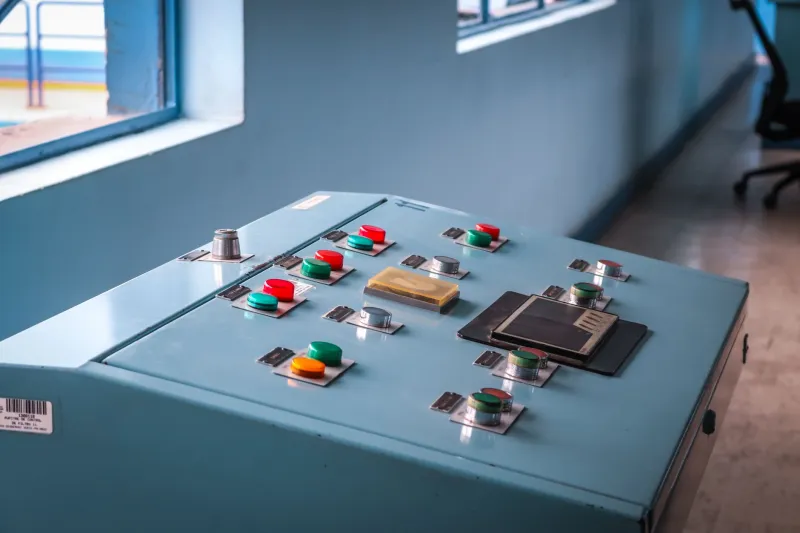
There is a version of technological progress that looks, from the outside, like advancement but functions, from the inside, like a trap. It arrives in the form of a sophisticated industrial control system, a proprietary automation platform, or a closed-loop equipment ecosystem that delivers genuine capability improvements at the point of purchase—and then, gradually, reveals the terms attached to that capability. Integration with third-party systems requires a licensed middleware module. Firmware updates are controlled by the vendor. Adding a sensor from a different manufacturer requires a compatibility certification that costs time and money. Switching to a competing platform means replacing not just the software but potentially the hardware it runs on.
This is vendor lock-in as it manifests in American manufacturing, and it is not a minor inconvenience. It is a structural constraint on the ability of US industrial facilities to innovate, adapt, and compete in an environment where production flexibility has become as important as production capacity.
The Promise That Becomes a Dependency
The mechanism of vendor lock-in in industrial environments is rarely adversarial at the outset. Proprietary ecosystems often deliver real value: seamless integration between components from the same vendor, optimized performance, consolidated support, and reduced complexity during initial deployment. A manufacturer selecting a single-vendor automation stack is making a rational decision based on the information available at the time of purchase.
The constraint emerges later, as the facility's operational needs evolve in directions the original vendor did not anticipate—or chose not to support. A production line needs to integrate data from a new class of sensors that the control platform does not recognize natively. A quality management system from a best-in-class provider cannot connect to the production execution software without a proprietary API license that the vendor prices at a premium. A plant manager wants to run a third-party analytics application against machine data that the control system stores in a proprietary format that cannot be exported without vendor-supplied tools.
At each of these junctures, the manufacturer faces a choice between paying the vendor's terms and forgoing the capability. Over time, the accumulation of these decisions—each individually defensible, collectively constraining—produces a facility whose technology roadmap is effectively controlled not by its own operations leadership but by the licensing and product development priorities of its equipment suppliers.
The Real Cost Is Measured in Missed Pivots
The most visible cost of vendor lock-in is the premium pricing that proprietary ecosystems can command for upgrades, integrations, and support. This is real and significant, but it is not the most consequential cost. The deeper damage is strategic: the opportunities that manufacturers cannot pursue because their systems will not support them without prohibitive reconfiguration expense.
Consider the position of a US contract manufacturer whose primary automation platform does not natively support the data exchange protocols required by a major automotive OEM's new supplier quality program. To participate in that program—and retain or expand the contract—the facility must either pay its automation vendor to develop a custom integration, invest in a middleware solution that the vendor may or may not certify, or undertake a partial platform migration that disrupts production. None of these options is cheap. None of them would have been necessary if the original system had been built on open, interoperable standards.
Or consider the aerospace supplier that identified an AI-powered defect detection system capable of reducing inspection cycle times by a meaningful margin—only to find that the vision system's data output could not be ingested by the facility's production execution platform without a custom integration project that would take eighteen months and cost more than the projected savings over the same period. The technology existed. The business case existed. The proprietary architecture made the investment irrational.
These are not edge cases. They are recurring patterns across US manufacturing sectors, and their cumulative effect on American industrial competitiveness is substantial.
What Breaking Free Actually Looks Like
The manufacturers who have navigated out of deep vendor dependency share several characteristics in their approach. First, they made open standards a procurement criterion rather than an afterthought. Facilities that now specify OPC-UA compatibility, MQTT support, or REST API availability as baseline requirements for any new equipment purchase have significantly more flexibility in how they integrate and evolve their technology stacks than facilities that evaluated these factors only after the purchase decision was made.
Second, they invested in integration middleware as a strategic asset rather than a project-by-project expense. Industrial integration platforms that can translate between proprietary protocols and open data formats function as a kind of sovereignty layer—insulating the rest of the technology stack from the data format decisions of any single vendor. This does not eliminate the cost of proprietary systems, but it limits their ability to constrain the broader architecture.
Third, and perhaps most importantly, they renegotiated or restructured their vendor relationships with explicit attention to data ownership and portability. The right to export operational data in open formats, to connect third-party applications to the control system, and to receive firmware and security updates without bundled service contract requirements—these are contractual terms that manufacturers with leverage have successfully negotiated, and that smaller facilities are increasingly demanding as market awareness of lock-in costs grows.
The Open Standards Argument Is Now a Business Case, Not an Ideology
For much of the past two decades, the argument for open industrial standards was framed primarily in technical terms—interoperability, flexibility, future-proofing. These arguments were correct but abstract, and they competed against the concrete, immediate value proposition of integrated proprietary ecosystems.
The framing has shifted. As US manufacturers face accelerating pressure to adopt AI-driven quality tools, edge computing infrastructure, and advanced analytics platforms, the cost of systems that cannot connect to these capabilities without vendor permission is no longer a future risk. It is a present competitive disadvantage. The business case for open standards is now written in the language of contracts lost, upgrades deferred, and innovation cycles missed—language that operations leadership and financial decision-makers find considerably more compelling than architectural theory.
The manufacturers gaining ground in the current industrial environment are not necessarily those with the most sophisticated proprietary systems. They are the ones whose technology architectures give them the freedom to adopt the best available tool for each specific problem—without first consulting a vendor's compatibility matrix or licensing schedule.
In manufacturing, as in most competitive domains, the ability to move is itself a form of advantage. Proprietary lock-in does not just cost money. It costs agility. And agility, in the current market, is not a luxury. It is the competitive currency that determines which American manufacturers lead and which ones fall behind.